Artificial Intelligence for Technology Departments
From Reactive Teams to Platforms That Create Business Value
Technology departments have evolved from support functions into critical enablers of business growth and resilience. Nevertheless, many organizations remain trapped in reactive operating models characterized by incident management, accumulating technical debt, and constant pressure to deliver more with the same resources.
Artificial intelligence offers technology departments an opportunity to redefine their role—not only by improving efficiency, but also by increasing their strategic contribution to the business.
Why Technology Departments Are Fertile Ground for AI
IT functions have several characteristics that make them particularly suitable for AI adoption:
- Large volumes of operational data from systems, logs, tickets, and performance metrics
- Repetitive and highly technical processes with clear cause-and-effect patterns
- Dependence on specialized knowledge that is difficult to scale and retain
- Organization-wide impact affecting every area of the business
AI can transform this complexity into faster and more reliable decisions.
Key AI Use Cases in Technology
Predictive IT Operations—AIOps
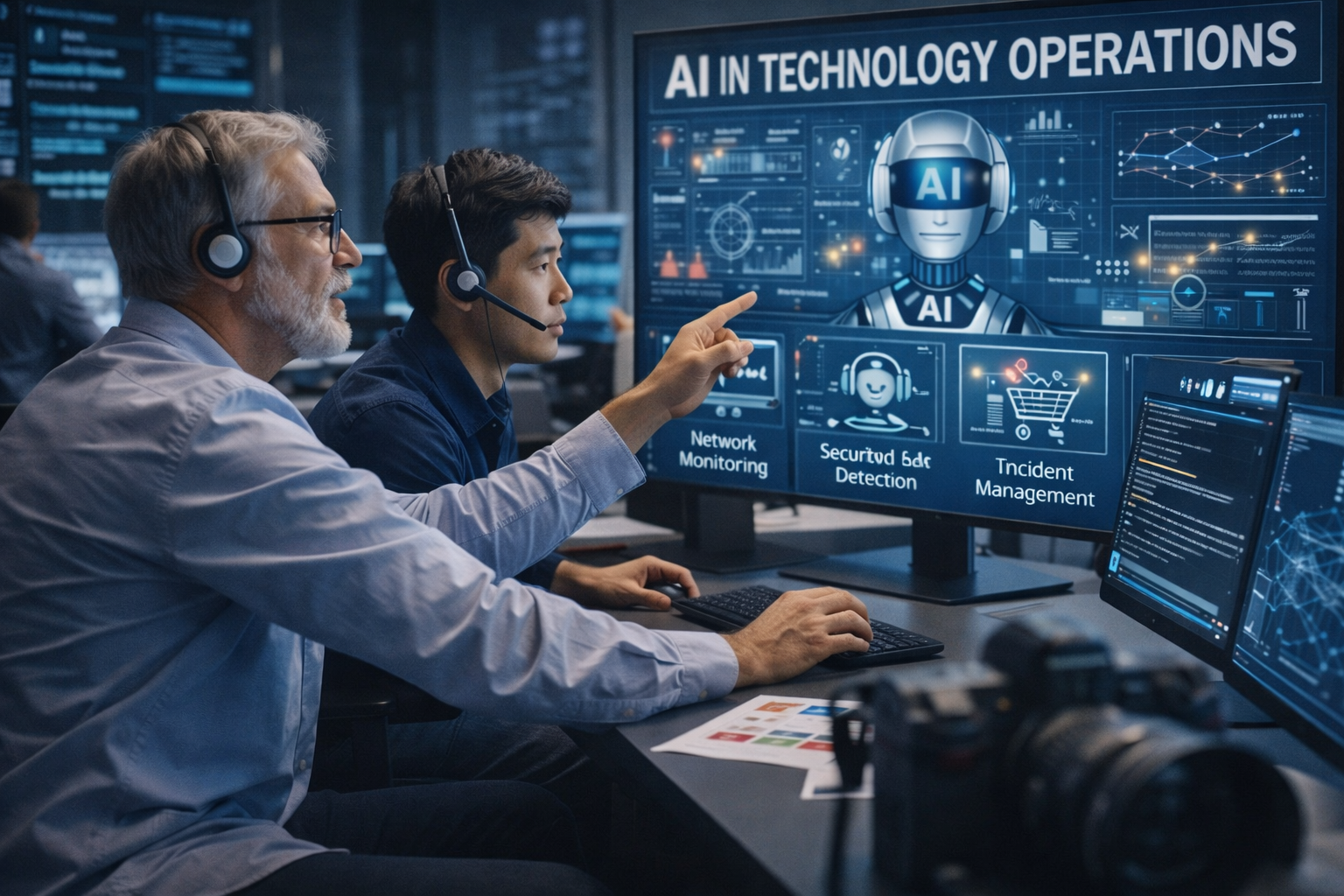
AI can anticipate incidents, service degradation, and bottlenecks before they affect end users, enabling a shift from reactive to preventive operations.
Typical impact:
- Fewer critical incidents
- Lower mean time to resolution
Intelligent Technical-Support Automation
Automated ticket classification, AI-assisted diagnosis, and the resolution of common incidents free up teams to concentrate on complex problems.
Typical impact:
- Greater support efficiency
- Better internal user experience
Managing and Reducing Technical Debt
Analysis of code, dependencies, and historical patterns enables teams to prioritize technical debt more effectively and focus on issues that create genuine risk or friction.
Typical impact:
- Better allocation of development resources
- Reduced future operational risks
AI-Augmented Software Development
Generative AI can assist with code, testing, documentation, and review, accelerating development cycles without compromising quality.
Typical impact:
- Greater team productivity
- More consistent delivery
The Common Mistake: Viewing AI as Just Another Tool
Many IT departments introduce AI through isolated solutions without changing their operating model. The result is usually incremental improvement rather than genuine transformation.
Leading organizations reconsider several fundamental questions:
Which technical decisions are repeated? Where is expert time being lost? Which risks could be anticipated?
AI should be designed to answer these structural questions.
How to Structure an AI Strategy for Technology
More mature companies follow four principles:
- Prioritize use cases with a clear operational impact, not only technical novelty
- Integrate AI into existing tools and avoid unnecessary complexity
- Ensure explainability and control, particularly in critical environments
- Develop internal capabilities rather than depending exclusively on external providers
The Role of Technology Leadership
For AI to genuinely transform technology departments, leaders must:
- Align AI initiatives with business objectives rather than only technical metrics
- Manage the cultural shift toward more preventive and automated operating models
- Recognize that intelligent standardization improves both speed and quality
Without this leadership, AI will optimize individual tasks rather than redefine the role of IT.
Conclusion
Artificial intelligence enables technology departments to evolve from cost centers into strategic value platforms. By anticipating problems, automating decisions, and strengthening technical talent, AI frees up capacity so IT can focus on what truly matters: enabling business growth.
Competitive advantage no longer lies in reacting faster, but in anticipating issues and acting before they occur.