Artificial Intelligence for Leasing Companies
How Leasing Companies Can Improve Profitability, Risk Management, and Customer Experience Throughout the Contract Lifecycle
Leasing companies—whether operating in real estate, financial services, vehicles, or productive assets—work in an environment characterized by tight margins, significant risk exposure, and heavy operational workloads. Decisions draw on large volumes of data but are often executed using static rules, manual analysis, and fragmented processes.
Artificial intelligence can transform this model by enabling companies to move from reactive portfolio administration to predictive and optimized management of the entire leasing lifecycle.
Why Leasing Is an Ideal Use Case for AI
Leasing companies have several characteristics that support capturing value through AI:
- Long and clearly defined lifecycles, from origination through renewal or termination
- Repetitive, high-impact decisions involving approvals, pricing, maintenance, and recovery
- Rich historical data on payments, asset usage, defaults, and residual value
- Cumulative financial risk, where small errors become amplified over time
AI can use this data to anticipate behavior and optimize results.
Key AI Use Cases for Leasing Companies
Risk Assessment and Intelligent Origination
AI models can evaluate the probability of default using traditional and nontraditional variables, moving beyond static scoring models.
Typical impact:
- Improved risk-adjusted approval rates
- Reduced early-stage delinquency
Dynamic Pricing and Contract Optimization
AI can establish more precise leasing terms—including payments, duration, and guarantees—according to the customer profile, asset, and market conditions.
Typical impact:
- Improved margin per contract
- Better balance between competitiveness and profitability
Predictive Portfolio Management
Predictive models can anticipate default risk, asset deterioration, or the need for early intervention, enabling preventive action.
Typical impact:
- Reduced losses
- Greater portfolio stability
Asset Maintenance and Residual Value
For leases involving physical assets, AI can predict failures, optimize maintenance, and estimate residual value more accurately at the end of the contract.
Typical impact:
- Lower maintenance costs
- Better resale or renewal results
Automating the Operational Lifecycle
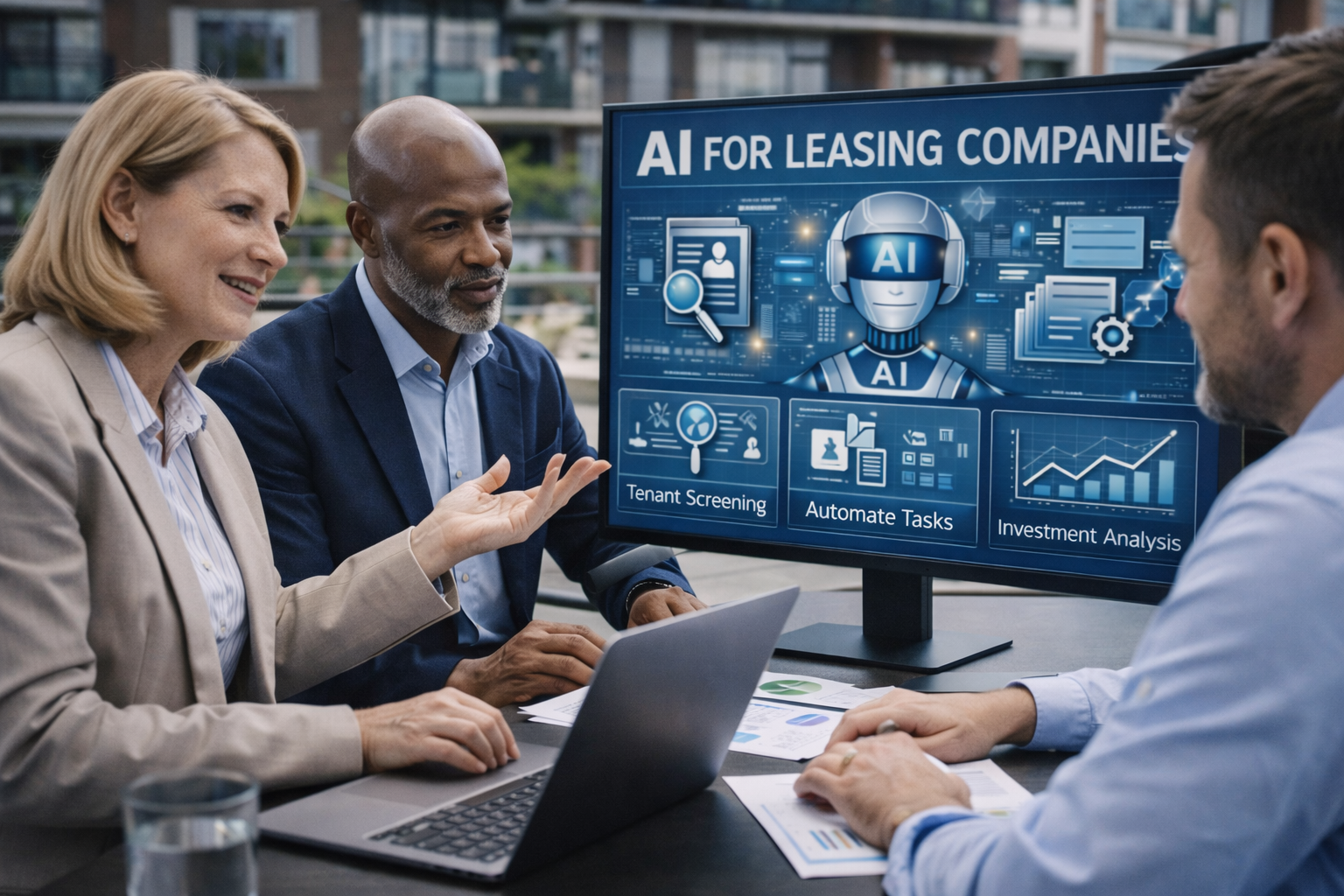
AI can automate recurring tasks such as document validation, renewal management, payment follow-up, and customer support.
Typical impact:
- Lower operating cost per contract
- Better customer experience
The Common Mistake: Using AI Solely for Risk Control
Many companies introduce AI exclusively to make approval criteria stricter. Although this reduces risk, it can also limit growth.
More advanced organizations use AI to optimize the overall balance among risk, profitability, and customer experience—not merely to say “no” with greater precision.
How to Structure an AI Strategy for Leasing Companies
Companies that capture sustainable value from AI generally follow four principles:
- Adopt an end-to-end view of the contract, from origination through closing
- Use integrated models that connect risk, pricing, and operations
- Establish clear financial metrics such as risk-adjusted profitability and total contract cost
- Ensure governance and explainability, particularly for credit and regulatory decisions
The Role of Leadership in AI Adoption
For AI to genuinely transform the leasing business, leaders must:
- Align risk, sales, and operations teams around shared objectives
- Accept more dynamic decisions instead of relying solely on historically rigid rules
- Invest in data quality and internal analytical capabilities
Without these decisions, AI remains an isolated improvement rather than a competitive advantage.
Conclusion
Artificial intelligence enables leasing companies to manage risk more effectively, increase profitability, and provide a faster, more personalized customer experience. By transforming historical data into predictions and actions, AI makes leasing more precise, scalable, and resilient.
Competitive advantage no longer lies in administering contracts, but in anticipating behavior and optimizing every decision throughout the leasing lifecycle.